

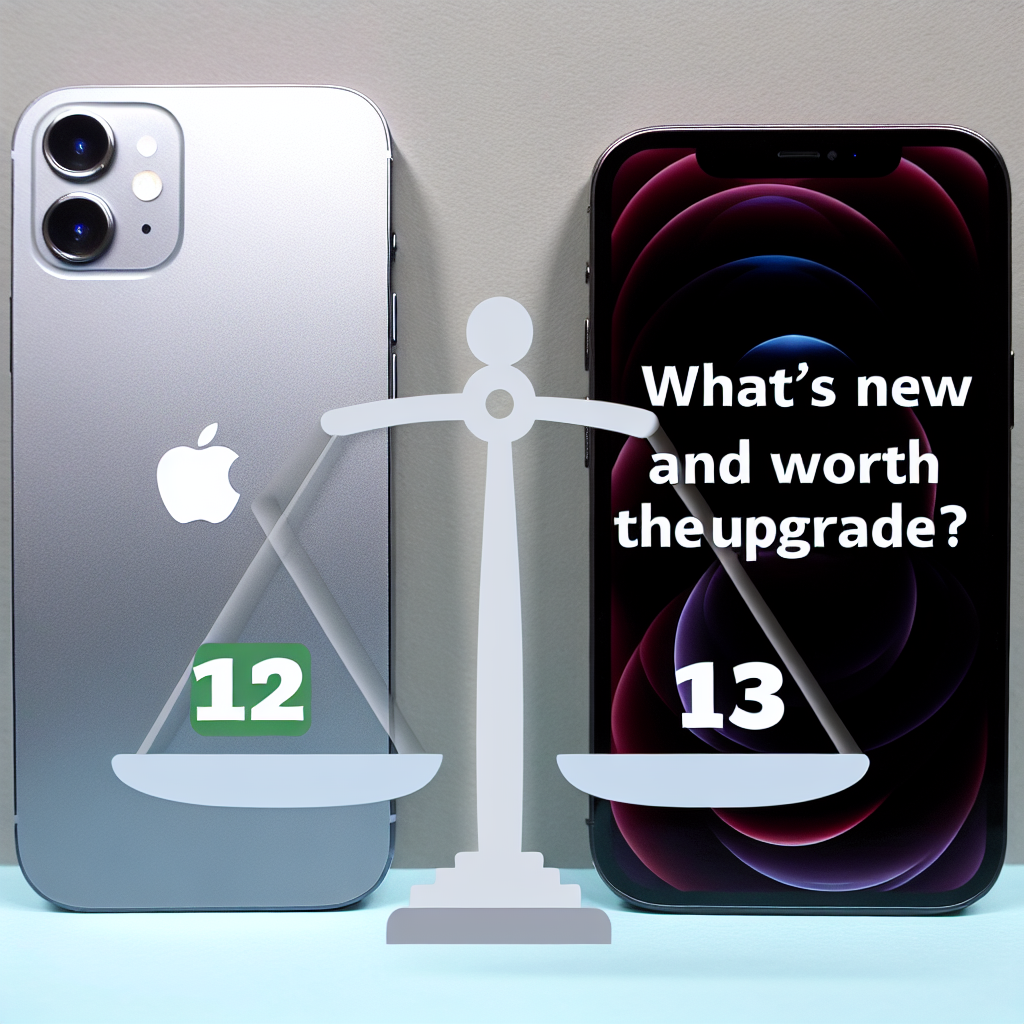
As the smartphone market is evolving, each new release from the tech giants creates excitement and speculation among consumers. When Apple unveiled the iPhone 13, many enthusiasts and potential buyers began comparing it to its predecessor, the iPhone 12, to determine whether the new model was worth the investment. This article will take an in-depth look at the differences between the iPhone 12 and iPhone 13, examining the design, performance, camera capabilities, battery life, software features, and pricing. Finally, we will answer common FAQs to guide you in your decision.
design
iPhone 12 Design
The iPhone 12 was notable for a return to a flat-edge design reminiscent of the iPhone 4 and iPhone 5. This design choice was a breath of fresh air within the smartphone landscape, featuring the rounded edges prevalent in many contemporary devices. The iPhone 12 is available in several color options: black, white, (product)red, green, blue, and purple.
The device features a Ceramic Shield front cover that offers four times better drop performance than the previous model, contributing to durability. The iPhone 12 features a 6.1-inch Super Retina XDR display, with OLED technology delivering vibrant colors and deep blacks for a stunning viewing experience.
iPhone 13 Design
While the iPhone 13 retains many of the design features of the iPhone 12, there are subtle changes that set it apart. The most visible difference is the diagonal alignment of the dual camera system on the back of the device. This new arrangement not only differentiates the iPhone 13 visually, but is also said to improve image quality due to adjustments in lens spacing.
In terms of color options, the iPhone 13 offers a new palette that includes Starlight, Midnight, Blue, Pink and a new (PRODUCT)RED variant.
Both models use aerospace-grade aluminum and glass while maintaining the premium feel. The iPhone 13 is slightly thicker and heavier than the iPhone 12 due to the increased battery capacity.
Display
A14 Bionic vs A15 Bionic
The iPhone 12 is powered by Apple’s A14 Bionic chip, which was a significant leap in performance and efficiency when it was released. It has a 6-core CPU, 4-core GPU, and 16-core Neural Engine, allowing efficient multitasking and high-performance gaming. The A14 chip is built on a 5nm process, which significantly improves power consumption.
However, the iPhone 13 is equipped with the A15 Bionic chip, which further boosts performance. The A15 retains the 6-core CPU but upgrades the GPU to a 4-core model and features an even more advanced 16-core Neural Engine. With faster graphics performance and better machine learning capabilities, the A15 is also built on a 5nm process, but includes improvements for increased efficiency.
In real-world performance, users may find that the difference in speed is not too noticeable during daily tasks. However, the A15 shines during demanding applications, especially those that require intensive graphics processing, like gaming or video editing.
camera system
iPhone 12 Camera
The iPhone 12 features a dual-camera system that includes a 12MP ultra-wide lens with an f/2.4 aperture and a 12MP wide lens with an f/1.6 aperture. Night Mode, Deep Fusion and Smart HDR3 improve low-light photography and enhance image quality. While the iPhone 12’s camera system is impressive, it lacks some of the more advanced features introduced in the iPhone 13.
iPhone 13 Camera
The iPhone 13 camera system includes several enhancements that improve the photography experience. The sensor-shift optical image stabilization feature on the wide camera, previously exclusive to the iPhone 12 Pro Max, provides better stability during shoots.
The introduction of Photographic Styles allows users to customize the look of their images with real-time adjustments, giving greater control over the final aesthetic. Cinematic mode is a standout feature, enabling users to shoot videos with shallow depth of field and automatic focus changes, adding a professional touch to video content.
Users can expect improved low-light performance and improved dynamic range when shooting in challenging lighting conditions while enjoying new creative tools, making iPhone 13 an attractive choice for photographers and videographers.
battery life
iPhone 12 battery life
The iPhone 12’s battery life averages about 17 hours of video playback, which is enough for a day of moderate use. However, users sometimes expressed the need for longer battery life, especially with intensive tasks.
iPhone 13 battery life
Apple addressed concerns about battery longevity with the iPhone 13. The device offers an improved battery life with up to 19 hours of video playback thanks to the larger battery and more efficient A15 Bionic chip. The enhancements allow users to engage in activities like video streaming, gaming and social media without the constant need for a charger, thus providing a more convenient experience.
Software Features
iOS 14 vs iOS 15
Both devices run on iOS, with the iPhone 12 launching natively with iOS 14. The iPhone 13 comes with iOS 15, which introduces a number of new features and improvements, including advanced focus modes, redesigned notifications, and improved FaceTime capabilities. While new software features are often available for older devices, some functionalities – particularly those that take advantage of the A15 Bionic chip – are exclusive to the iPhone 13.
Compatibility with future updates
An important consideration for many users is the future compatibility of software updates. The iPhone 12 will continue to receive updates for several years, but the iPhone 13 will likely get a longer support window due to its new hardware. This becomes important if you are looking for a device that will remain relevant with the latest software advancements.
price
When it comes to price, the iPhone 12 was marketed as a slightly more affordable option than previous flagship models. In contrast, while Apple kept the iPhone 13 at the same starting price, promotions, rebates, and trade-in programs have made the latter model attractive to many consumers considering an upgrade.
Should you upgrade?
Upgrading from iPhone 12 to iPhone 13 depends on personal preferences and usage patterns. If you frequently use your phone for photography, gaming, or video consumption, the improvements in battery life, camera functionality, and overall performance may justify the investment. On the other hand, if your iPhone 12 still meets your needs well enough, you may be content to wait until the next release.
questions to ask
1. What are the main differences between iPhone 12 and iPhone 13?
Key differences include the introduction of the A15 Bionic chip, increased camera capabilities (such as cinematic modes and sensor-shift stabilization), improved battery life, and subtle design changes. The iPhone 13 also offers additional features in iOS 15 that are not available on the iPhone 12.
2. Is the iPhone 13 camera better than the iPhone 12?
Yes, the iPhone 13 features improved camera technology, including sensor-shift optical image stabilization and new photographic styles. The introduction of Cinematic mode also enhances video capabilities, making it a better choice for users focused on photography and video.
3. How much better is the battery life of the iPhone 13?
The iPhone 13 offers about 2 hours more battery life than the iPhone 12, which is about 19 hours of video playback compared to the 17 hours provided by the iPhone 12.
4. Will iPhone 12 continue to receive software updates?
Yes, the iPhone 12 will continue to receive software updates for many years. However, the iPhone 13 may receive updates for a longer period due to its new hardware.
5. Is it worth upgrading from iPhone 12 to iPhone 13?
If you rely heavily on your smartphone for photography, gaming, or video streaming, the improvements in the iPhone 13 may justify the upgrade. However, if your iPhone 12 meets your needs, it may be worth waiting for a future model or seeing how the iPhone 13 performs in real-world scenarios.
conclusion
The choice between iPhone 12 and iPhone 13 ultimately depends on personal needs and preferences. While the difference between the two devices may not be huge for every user, the advancements in performance, camera capabilities, and battery life make the iPhone 13 an attractive upgrade for many. Users who take full advantage of the latest technology may find that the new models’ additional features are more than worth the investment. As always, it’s important to evaluate your personal usage patterns and preferences before deciding to upgrade.
