

Introduction
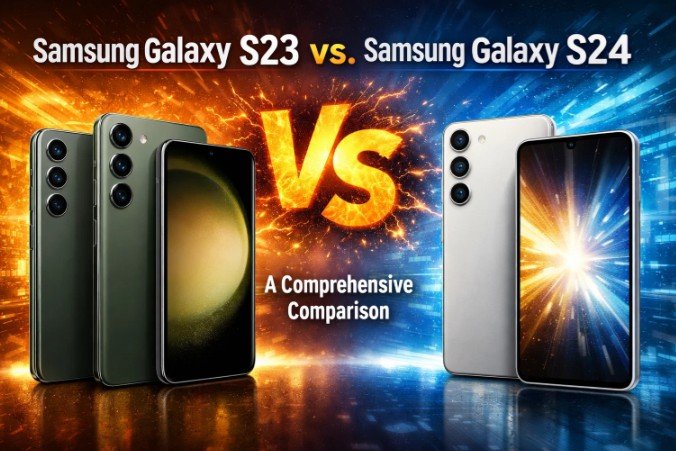
The smartphone market has witnessed significant evolution in recent years, with flagship devices continuously setting benchmarks for performance and innovation. Among the leaders in this segment, Samsung has consistently pushed the envelope with its Galaxy S series. In this blog post, we will delve into a comprehensive comparison of two formidable contenders in this lineup: the Samsung Galaxy S23 and the Samsung Galaxy S24.
The Samsung Galaxy S23, launched earlier, garnered attention for its robust features and cutting-edge technology. From its impressive camera capabilities to its sleek design, the Galaxy S23 was positioned as a premium device for tech enthusiasts and casual users alike. However, the introduction of the Samsung Galaxy S24 promises to elevate user experience even further, with enhancements that cater to the demands of modern smartphone users.
This comparison aims to highlight the notable differences and similarities between these two flagship smartphones. By examining their features, specifications, and overall performance, potential buyers can make informed decisions tailored to their preferences. Furthermore, understanding how the Galaxy S24 integrates advancements over its predecessor will allow users to appreciate the continuous innovation Samsung brings to the market.
As we progress through the analysis, we will explore key aspects such as design, display quality, battery life, performance, and camera technology. Each of these elements plays a crucial role in determining which smartphone truly stands out in real-world applications. With the Galaxy S23 having laid a strong foundation, the Galaxy S24 looks set to challenge and redefine expectations.
Design and Build Quality
The design and build quality of a smartphone play a crucial role in the user experience, and this holds true for both the Samsung Galaxy S23 and Samsung Galaxy S24. Although both devices reflect Samsung’s sleek and modern design philosophy, they exhibit notable differences that cater to varying user preferences.
The Samsung Galaxy S23 features a compact form factor with dimensions of 146.3 x 70.9 x 7.6 mm, and weighs approximately 167 grams. Its construction utilizes Gorilla Glass Victus 2 on the front and back, along with an aluminum frame, enhancing durability while providing a premium feel. The aesthetic appeal of the S23 encapsulates a minimalist design, with a centered punch-hole camera and subtly curved edges that contribute to its ergonomic shape, ensuring easy handling and operation.
In comparison, the Samsung Galaxy S24 boasts slight alterations in dimensions, measuring 146.2 x 70.6 x 7.6 mm, and weighs around 168 grams. Though the weight difference is negligible, the S24 introduces refined materials and a more advanced manufacturing process that enhances its overall sturdiness. Its design makes use of an upgraded Corning Gorilla Glass Victus 3, promising improved resistance to drops and scratches. The S24 retains the punch-hole aesthetic, but its bezels have been minimized, offering a more extensive display surface area that appeals to users seeking immersive experiences.
Moreover, the shift from the S23 to the S24 reflects a subtle evolution in design philosophy. The S24 not only prioritizes aesthetics but also usability, featuring improved grip thanks to a refined back texture, making it less prone to slipping. Overall, while both models boast admirable build quality, the Samsung Galaxy S24 brings forth incremental innovations that enhance its physical appeal and usability for everyday tasks.
Display Technology
The Samsung Galaxy S23 features a Dynamic AMOLED 2X display measuring 6.1 inches, with a resolution of 2340 x 1080 pixels. This ensures vibrant colors and deep contrasts, catering well to multimedia consumption. It boasts a peak brightness of 1750 nits, providing a clear view even under direct sunlight. The refresh rate is adaptive, reaching up to 120Hz, which greatly enhances the fluidity of on-screen animations and touch responsiveness.
In contrast, the Samsung Galaxy S24 elevates the display experience with a slightly larger 6.2-inch Dynamic AMOLED 2X screen. It retains an impressive resolution of 2340 x 1080 pixels while introducing stunning enhancements in brightness and color accuracy. The peak brightness has been pushed to 2000 nits, ensuring that users experience exceptional visibility and vibrant visuals in various environmental conditions. The adaptive refresh rate remains a highlight of the S24, supporting up to 120Hz, optimizing power usage without compromising user experience.
Notable advancements in the Galaxy S24’s display technology include an improved color calibration system, which enables greater color accuracy. This is particularly beneficial for photography enthusiasts and content creators seeking precise color representation on their devices. The display’s durability has also been fortified with the inclusion of Corning Gorilla Glass Victus 2, offering enhanced protection against scratches and accidental drops.
Overall, both models provide an outstanding viewing experience with advancements in the Galaxy S24’s display technology, focusing on brighter visuals and improved durability, ensuring an engaging interaction for users who value display quality highly.
Camera Capabilities
The camera capabilities of the Samsung Galaxy S23 and Samsung Galaxy S24 represent significant advancements and refinements in mobile photography. Both smartphones boast impressive specifications, yet they differ in certain aspects that could influence a buyer’s choice.
The Samsung Galaxy S23 features a versatile camera setup, including a triple-lens system with a 50 MP wide sensor, a 12 MP ultra-wide sensor, and a telephoto lens that offers 30x Space Zoom capabilities. This arrangement allows users to capture stunning images across a range of scenarios, from expansive landscapes to detailed close-ups. Video recording on the S23 supports up to 8K resolution at 30 frames per second, providing exceptional clarity and detail.
In contrast, the Samsung Galaxy S24 introduces several enhancements in its camera system. While maintaining the triple-lens configuration, the S24 upgrades its main sensor to a robust 200 MP, promising improved low-light performance and greater detail in high-resolution images. The ultra-wide lens remains at 12 MP, but the telephoto capabilities have been enhanced to include improved optical zoom technology, delivering clearer images at greater distances. Furthermore, the S24’s video recording supports advanced features such as 8K resolution at 60 frames per second, enabling smoother playback and higher fidelity for videographers.
User experiences shared through various reviews indicate that the real-world performance of both models impresses in different conditions. The S23 excels in day-to-day photography, while users highlight the S24’s ability to capture breathtaking low-light images and dynamic range. The S24’s incorporation of innovative software processing also contributes to impressive results, making it a favorite among photography enthusiasts.
Ultimately, the choice between the two may come down to specific photography needs and preferences.
Performance and Hardware
The performance and hardware of the Samsung Galaxy S23 and Samsung Galaxy S24 are critical factors in determining the best option for users seeking a premium smartphone experience. Both models are equipped with cutting-edge technology, and a direct comparison illustrates significant advancements in the latest iteration.
The Samsung Galaxy S23 is powered by the Qualcomm Snapdragon 8 Gen 1 processor, which delivers exceptional processing speeds and power efficiency. Coupled with up to 8GB of RAM, this device offers excellent multitasking capabilities and can handle demanding applications with ease. The storage options range from 128GB to 256GB of internal memory, providing ample space for apps, media, and documents.
In contrast, the Samsung Galaxy S24 incorporates the newer Qualcomm Snapdragon 8 Gen 2 chipset. This upgrade not only improves processing speed and power consumption but also enhances gaming performance and graphics rendering. Users can expect smoother visuals and quicker load times, particularly in graphically intensive applications. Additionally, the S24 offers a variety of RAM configurations, including options of 8GB and 12GB, which facilitates even more extensive multitasking capabilities and future-proofing against upcoming applications.
Regarding storage, the Galaxy S24 also provides users with choices ranging from 256GB to 512GB, allowing for greater flexibility in managing files. Software optimizations have also evolved; Samsung’s One UI, present in both models, has been fine-tuned to provide fluid navigation and system responsiveness, ensuring users can efficiently navigate their devices.
In practical terms, users of the Galaxy S24 will find that everyday tasks run seamlessly due to the hardware and software optimizations. Benchmark tests frequently highlight the S24’s superior performance across various metrics, demonstrating its readiness for both casual and power users alike. Overall, both devices are impressive; however, the enhancements in the S24 make it a compelling choice for those prioritizing high-level performance.
Battery Life and Charging
When comparing the Samsung Galaxy S23 and Galaxy S24, one of the key areas to consider is battery life and charging technologies. The Galaxy S23 is equipped with a robust battery capacity of 3,900 mAh, while the Galaxy S24 ups the ante with a 4,000 mAh battery, providing a slight increase in overall power availability. This added capacity enhances device longevity, allowing users to enjoy extended periods of usage between charges.
In terms of real-world battery performance, both devices have some similarities and notable differences. Users of the Galaxy S23 report that with moderate usage, including social media browsing and streaming, the phone effectively lasts a full day without requiring a recharge. The Galaxy S24, on the other hand, boasts improvements in its energy efficiency, attributed to its latest processor and software optimizations, allowing it to perform similar tasks with a bit less power consumption.
Charging capabilities are also a significant factor in the usability of any smartphone. The Galaxy S23 supports 25W wired charging and 15W wireless charging, which has proven adequate for most use cases. However, the Galaxy S24 introduces fast charging technology that can support 45W wired charging, significantly reducing the charging time compared to its predecessor. Both devices offer compatibility with wireless charging, yet the development of reverse wireless charging in the S24 provides an additional convenience for users needing to charge accessories on the go.
Software updates play a critical role in optimizing battery life as well. Through updates, Samsung continuously enhances battery management systems, helping users of both models leverage their devices efficiently. Users can expect adjustments that optimize background activity and maximize battery lifespan further improving the overall user experience of both the Samsung Galaxy S23 and Galaxy S24.
Software and User Experience
The Samsung Galaxy S23 and the forthcoming Samsung Galaxy S24 both run on Android, with Samsung’s One UI serving as the primary user interface. The Galaxy S23 launched with One UI 5, which integrated features like enhanced personalization options, improved multitasking capabilities, and a more intuitive settings menu. With its powerful performance and user-friendly interface, the S23 has set a high standard for user experience.
The Galaxy S24, however, is expected to introduce even more advancements in software performance. Most likely, it will debut with One UI 6, bringing refined aesthetics and additional features that further enhance user interaction. These improvements may include upgraded widgets, a more efficient notification system, and possibly even enhanced integration with smart devices in the Samsung ecosystem. With each iteration, Samsung aims to provide a more seamless experience for its users, making the transition between apps and tasks smoother.
Regular software updates play a vital role in enhancing the longevity and functionality of smartphones. Users of the Galaxy S23 can expect ongoing updates that not only fix bugs and security vulnerabilities but also deliver new features and improvements. Samsung has demonstrated a commitment to providing extended software support, enhancing the phones’ overall life cycle. The Galaxy S24 is likely to continue this trend, providing users with a guarantee of timely updates, thereby ensuring that the device remains competitive in a rapidly advancing technology landscape.
User experience is a pivotal factor, and it varies from one model to the next. While both phones benefit from Samsung’s extensive ecosystem, nuances in performance, interface design, and functionality of the latest software will cater to user preferences. Consequently, while the Galaxy S23 offers a robust performance, the enhancements expected in the S24 suggest it may provide an even more refined and engaging user experience.
Pricing and Availability
The Samsung Galaxy S23 and Galaxy S24 cater to different segments of the smartphone market, with distinct pricing strategies designed to attract diverse consumer preferences. When the Galaxy S23 launched, its starting price in the United States was approximately $799, which represented a competitive positioning within the high-end smartphone category. Conversely, the Galaxy S24 introduced a slight price increase at launch, priced starting around $849. This shift reflects the technological advancements imbued within the S24, justifying the incremental price increase.
As the older model, the Galaxy S23 prices have become more competitive since its launch, often finding promotions that drive its market price downward significantly. Retail outlets and online stores frequently offer discounts, especially during major sales events, benefiting consumers looking for value without sacrificing quality. Current market prices for the Galaxy S23 may be found as low as $600, while the Galaxy S24 maintains a higher resale value due to its status as the newer model, typically ranging between $799 to $849.
Availability of both models varies regionally. Samsung has established a robust distribution network allowing the Galaxy S23 and S24 to reach consumers globally. However, certain models may be exclusive to specific markets; for example, the Galaxy S24 may be available with distinct features in regions like Europe and Asia that are not present in the North American variants. Promotional offers and trade-in deals have also become commonplace, encouraging consumers to upgrade from older models while receiving credit towards their new devices. As such, it is advisable for potential buyers to explore both local and online options, as well as promotional offers from retailers and service providers, to secure the best possible pricing on these premium devices.
Conclusion: Which One Should You Choose?
After evaluating the specifications, features, and performance of both the Samsung Galaxy S23 and Samsung Galaxy S24, it becomes essential to assess your individual needs and preferences when determining the right smartphone for you. The Galaxy S23, which has demonstrated itself as a reliable smartphone, remains an excellent choice for users who prioritize budget-friendly options without sacrificing quality. It features a robust design, impressive camera capabilities, and a solid battery performance that appeals to a wide audience.
On the other hand, the Samsung Galaxy S24 is pitched as a more advanced model, addressing several shortcomings of its predecessor. With enhancements in processing power, improved camera technology, and potential advancements in display quality, the S24 may attract tech enthusiasts and those seeking the latest features. Its higher price point reflects its additional capabilities, especially for users who consistently utilize their smartphones for intensive applications, gaming, or photography.
When weighing the decision, consider factors such as your budget, the kind of tasks you regularly perform on your smartphone, and whether having the latest technology truly adds value to your experience. If you lean towards casual use such as web browsing, social media, and occasional photography, the Samsung Galaxy S23 may serve all your needs efficiently. Conversely, if you require a smartphone that supports high-demand applications or photography with cutting-edge features, investing in the Galaxy S24 could be a worthwhile decision.
Ultimately, both models present exceptional benefits, ensuring that potential users will find a smartphone that fits their lifestyle and preferences. Assess your priorities and choose wisely; either device represents a significant step in the evolution of mobile technology.
